Scotland doesn’t need more capital: it needs calibration
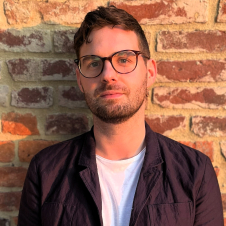
Nick Murray
Start-up programme architect and director of TecTonic Night Summit
Rethinking how we talk about funding, ambition, and start-up growth north of the border
Having worked across Scotland’s start-up scene for more than a decade, inside ventures, alongside hundreds of founders, and through the design and delivery of local and international programmes, I’ve seen the same debate surface time and time again.
Why isn’t more capital coming into Scottish startups?
It’s an understandable question, but not the right one. The answer isn’t just about geography. It’s about exposure, density, and calibration.
Geography plays a role, but mindset plays a bigger one
London continues to dominate UK venture capital, but the tide is shifting for high-conviction deals. According to Beauhurst 2025, around 58% of equity investment was secured by London-based companies in 2024, with Scotland accounting for 5%. That proximity bias is real. There are more funds, more angles, and more signals to the community and coffee meetings with influencers and decision-makers.
But here’s what’s also true: when Scottish founders build international relationships, when they understand how to raise, and when they show up ready for scale, they get funded. Geography matters far less when traction, ambition, and preparation are in play.
If we are serious about changing the narrative, we need to stop blaming postcodes and start building exposure, mindset, and calibration.
Scotland has the talent. What we need is exposure. Scotland’s founders are building in deeptech, healthtech, and climate innovation. The ideas are world-class, but the ambition often isn’t visible enough. Too often, founders pitch small, ask small, and build in the shadows. Not because they lack courage or vision, but because they aren’t surrounded by enough people who have done it before. Investors don't just buy your product; they buy your ability to dominate a market. If your pitch deck stops at the border, so does the cheque.
In places like London, exposure is ambient. Founders absorb ambition and scale thinking by osmosis through stories, networks, meetups, and mentors. In Scotland, those voices are fewer and often scattered.
As the saying goes, you can’t be what you can’t see.
But there's a second, more subtle barrier:
Tall Poppy Syndrome. In a smaller ecosystem, there is a cultural pressure to keep your feet on the ground. To not get above yourself.
But VC doesn't fund grounded-ness. It funds outliers. When founders who do break through stay quiet about it, or are encouraged to, their stories never become the ambient inspiration the next generation needs.

Founders are getting funded, but let’s tell the story honestly
There has been a recent rise in headlines about international investors “flocking to Scotland.” That is a positive narrative, but also one that is misleading.
Scotland raised £92.3 million in VC investment in Q4 2024 alone, up 14% quarter-on-quarter, with transaction volumes also growing. New UK technology incorporations in Scotland rose 5% in 2024, in contrast to the UK overall, which saw a 5% reduction.
Those deals did not happen because investors suddenly noticed Scotland on a map. They happened because founders went and made them happen - by building traction, travelling, iterating, and pitching relentlessly and strategically.
Placing too much focus on the attractiveness of the ecosystem risks breeding complacency. It is not one over the other. Ecosystem health and founder mindset are deeply linked, but we should recognise that the most successful founders do not wait for visibility. They create it.
This isn’t just a Scotland problem. It’s a maturity problem.
Every young ecosystem wrestles with the same challenges: limited density, overlapping support programmes, and a lack of visible scale stories.
In Scotland, high-potential tech ventures are often grouped alongside SMEs, food and drink brands, and agencies within the same competitions and accelerators. It is well-intentioned but confusing.
Global tech start-ups require different networks, benchmarks, and investor readiness support. Without sharper segmentation, it is difficult for founders to benchmark themselves properly or attract the right kind of investment.
Real investors care about trajectory, not geography
Venture investors aren't avoiding Scotland. In fact, Scotland currently records double the number of equity deals per 100 high-growth enterprises compared to the UK average outside London. The access is there, so what’s really holding back deals?
Some decks are messy. Some cap tables are unbalanced. Others lack clarity around market size, scalability, or exit potential. These are not Scottish flaws. They are exposure and positioning issues.
Founders who are plugged into global networks, who understand investor psychology, and who present with precision get noticed regardless of geography.
However, one legitimate visibility issue remains: the absence of local operator-scouts who can bridge early-stage founders and international funds. Without that connective tissue, people who can validate, vouch, and filter, Scottish deals can stay under the radar.
Mentorship matters as much as money
It could be that the biggest bottleneck isn’t necessarily capital. It is scale-aware mentorship.
At the pre-seed end, there is definitely a gap in available capital. But even where money exists, too few founders have access to mentors who have actually scaled. People who can challenge, calibrate, and coach with lived experience.
We don’t need more cheerleading. We need more reality checks. We need more infrastructure that bridges the experience gap, and fewer programmes that mistake enthusiasm for expertise.
If you want VC money, you need to be in VC rooms
You can’t network your way to a term sheet from the sidelines. Relationships take time, and proximity matters.
Whether in London, the UAE, Berlin, or San Francisco, serious founders know they need to go where the momentum lives. That doesn’t mean moving south. It means being intentional, attending investor conferences, joining global accelerators, and building relationships over time.
Founders need to go to the money, not wait for it to come north.
What founders can do right now
Here are a few simple, actionable steps founders can take today to level up their exposure and readiness:
- Take what you can from your local ecosystem, but always look up and out.
- Use the international doorways on offer: Eagle Labs mentors, GlobalScots, and funded trips, but use them with intention, not just for inspiration.
- Set up Google Alerts for your sector. Make them specific. Curate your opportunities. Let the world bring you leads for global accelerators, competitions and networks that fit your industry and stage.
- Follow global operators in your industry. Learn from the next level, not the next desk.
- Create a founder peer group. One hour a month. Sense check strategies, trade blockers, contacts, investor lists. Evolve this network as you grow.
- Build an investor pipeline like a pro. Use tools like Shipshape.VC, OpenVC, Visible.vc, fundfinder.live, metal.so, and others to find relevant funds, not just those close to you.
- Ignore the dream-shrinkers. Surround yourself with people who’ve seen it or done it.
The mindset shift we need
Scotland doesn’t need a new fund. It needs a new lens that says:
We belong in the room. We are ready to scale. We are not waiting for permission.
The capital is there. The talent is here. The ecosystem will keep improving, and that matters for the thousands of founders at the earlier stages of the journey. But the founders this piece is written for won't wait for it to catch up. The missing piece isn't infrastructure. It's the internal calibration that says: we belong in the room, we're ready to scale, and we're not waiting for permission. Get that right, and geography stops being a limitation and starts being an interesting detail.
Find out more
If you would like to discuss this further, please don't hesitate to reach out to Nick Murray, or fill in the short form below.
You can also read the first blog on this topic, from Head of Technology & Life Sciences at Johnston Carmichael, Calum Purdie.