Slavery and Human Trafficking Statement
Introduction
This statement is made pursuant to section 54 (1) of the Modern Slavery Act 2015 and constitutes our modern slavery and human trafficking statement for the financial year ended 31 May 2025 for Johnston Carmichael LLP and all group entities.
Organisation Structure
Johnston Carmichael LLP is a Limited Liability Partnership registered in Scotland (SO303232) providing accountancy and business advisory services to clients, primarily based in Scotland but with a significant presence elsewhere in the United Kingdom. The firm has premises in Aberdeen, Dundee, Edinburgh, Elgin, Forfar, Glasgow, Inverness, Inverurie, London, Newcastle, and Stirling. We have 72 Partners, over 800 employees and a turnover of over £75m for the financial year ended 31 May 2025 across the Johnston Carmichael group entities. We are Scotland's largest independent firm of chartered accountants and business advisers and rank among the UK’s Top 20 accountancy firms as part of the international Moore Global Network. We are also officially recognised as a Great Place to Work.
Our Code of Conduct and our ethics policies are based on the core principles of:
- Integrity
- Objectivity
- Professional competence and due care
- Confidentiality
- Professional behaviour
In conducting our business, we are mindful of the role we play in serving the public interest. We are bound by the ICAS Code of Ethics which emphasises the requirement to act in the public interest and reminds us that as accountants we accept that responsibility. Our ethical behaviour and adherence to relevant ethical and professional codes directly benefits the public interest and society at large.
This is underpinned by our core values of Doing the right thing; Standing in other people’s shoes, Remaining relevant; and Leading our future.
Supply Chains
We are committed to maintaining a supply chain that is free from any form of slavery or human trafficking.
Operating primarily in the professional services industry, our supply chain focusses on procuring goods and services essential to our office operations and client service delivery. Consumables purchased include office supplies, marketing materials, IT equipment and estate services such as cleaning, waste management, office fixtures and fittings, security and catering and utilities.
Johnston Carmichael believes in supporting local business at the heart of the communities we serve. Many of our suppliers are local businesses who have their own due diligence in place to ensure they procure services and/or materials from socially responsible organisations. As we operate geographically within the UK, and our supply chain is predominantly UK based, our verification of supply chains includes fair treatment and pay of workers and verification of the right to work in the UK per the law across the country. Before engaging with a new supplier, we ask them to complete a new supplier due diligence questionnaire which ensures that they meet certain criteria which aligns with our own social, fair trade, environmental and sustainability aspirations. As part of our commitment to continuous supply chain improvement we intend in the current financial year to introduce a formal supplier code of conduct which will set out the commitments and values that we expect our suppliers to adhere to.
While we do not primarily operate in high-risk sectors or locations for commercial reasons, we are mindful that we do not become complacent in this regard, and we regularly evaluate the nature and extent of the firm’s exposure to the risk of modern slavery mitigating any potential risks as appropriate.
We will continue to implement and enforce effective systems and ongoing controls with new and existing suppliers. We will investigate any potential risk areas and act (including termination of a supplier relationship) as appropriate.
Sustainability Committee
As a firm committed to a sustainable future for our people, as part of a wide ranging governance review carried out by our CEO last year, four new governance committees were created, one of which is our Sustainability Committee which has a remit to embed a sustainable mindset into how we plan and operate, bringing together leaders from across the firm to drive long term sustainable thinking.
As expectations grow around our environmental, social and governance responsibilities this committee is essential to help the firm shape its sustainable approach to our people, environmental impact, infrastructure, supply chains and community engagement.
Due Diligence, Risk Evaluation and Management
Since the requirement to report on measures to prevent slavery and human trafficking was introduced, we have required all new and existing suppliers to confirm the steps they take to keep their own supply chains free from slavery and human trafficking. This attestation is obtained during supplier selection and again at contract renewal.
Our tender and procurement process now includes the same verification processes as those that form part of our standard due diligence practices. We will continue to review our central list of suppliers and are committed to carrying out an ongoing risk assessment of our supply chain based on annual spend, invoice frequency and other relevant factors. We continue to maintain proactive engagements with our external suppliers, mindful of both the environmental and social issues throughout those engagements and the impact our procurement decisions have on influencing positive social change at all times thus ensuring our supply chain is free from slavery and / or human trafficking.
In addition to the enhanced supplier due diligence and procurement procedures we have in place and the tender and procurement due diligence we expect our suppliers to adhere to, our internal training resources highlight to our people the links between modern slavery and our anti-money laundering obligations ensuring that this is well understood as part of our professional role in the eradication of financial crime, slavery and / or human trafficking.
We are committed to our environmental and social governance strategy (ESG) and we are confident that we can demonstrate to our various stakeholders, both internally and externally, that we are accountable for the stewardship of our people and our impact on the planet. Our ESG strategy aligns with our firmwide strategy, highlighting our commitment to 'Doing the right thing', which is one of our core values at Johnston Carmichael. We believe sustainability is the moral compass which sets out a broad set of principles to which we as an organisation aspire to, and ESG is the reporting framework which brings that sustainable ambition to life. People are, without doubt, our greatest asset and we want to build a firm which retains and attracts the best talent by providing an environment which puts people, planet, and profit on an equal footing.
More broadly, we continue to be mindful that climate change induced migration continues to increase the risk associated with human trafficking and modern slavery due to the growing scarcity of resources forcing many to migrate in search of work, food or safety. This is why we remain dedicated to reducing our carbon footprint as much as we can by continuing to review:
- Our property estate and our energy usage
- How we travel for business
- How we engage with our supply chain
- How we embrace further digitalisation and artificial intelligence
- How we can incorporate environmental best practice into everything we do.
We remain vigilant and continue to monitor our wider supply chain and its ethical sourcing to evidence the outcomes of our ESG action plans.
Training Resources and Policies
Aligned to our values our internal business policies and procedures are shared on our employee intranet and are regularly updated, communicated and discussed with Partners and employees to ensure they remain relevant. Our whistleblowing policy also sets out a process for reporting any concerns about wrongdoing or breaches of policies which includes reporting on forced or compulsory labour or human trafficking.
As a firm of professional accountants and business advisers regulated by ICAS, we are held to the standards and ethics expected of the professional accountant. This pervades every aspect of our practice, underpins our values, and is the foundation of the training we nurture in our people from day one. It also serves as the benchmark for evaluating our partnership candidates
Engaging and investing in our people is key to ensuring our values and approach to tackling modern slavery are part of our culture. To build understanding of the risks and signs of modern slavery and human trafficking in our business and our supply chains, we have created a range of learning resources for all of our people, including those involved in recruitment and procurement, and we’ve made these resources readily available on our internal learning platform. We continue to develop our internal training covering both technical training with ethics and compliance elements, to ensure our people have the skills and values they need to identify any potential risks.
In addition to a range of firm-wide national corporate social responsibility (CSR) initiatives, we also actively support and encourage local initiatives in each of our 11 offices. Each local office has a CSR team who link in with the overarching CSR committee, and each have a representative on that committee which allows joined up thinking, sharing of ideas and helps drive forward our CSR strategy for the firm. Alongside this, we have an Impact Fund which supports good causes based on applications for funding submitted by employees. In this regard, and to ensure we continually focus on supporting our people internally, we have an employee-led People and Culture Forum which is made up of a representative mix of employees from across the firm.
This statement has been approved by the Board of Johnston Carmichael LLP on behalf of its Members’ and all group entities and is signed by:
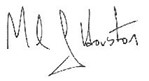
Mark Houston
Chair
A review of this statement will next take place by 30 October 2026.
Previous statements:
Read our Modern Slavery Statement from 2018 here.
Read our Modern Slavery Statement from 2019 here.
Read our Modern Slavery Statement from 2020 here.
Read our Modern Slavery Statement from 2021 here.
Read our Modern Slavery Statement from 2022 here.