Ninety years is a long time in business. Long enough to see industries rise, markets shift and technology rewrite the rules - more than once. Staying relevant and continuing to grow through all of that change is surely something worth celebrating. As we continue to mark our 90th year, we wanted to look back to where it all began and reflect on how far we’ve come since two men founded an accountancy firm in north east Scotland all those years ago.
When Johnston Carmichael began, way back in 1936, things were very different; the Kincardine bridge had only just opened, King George V had recently passed away, and the talking clock was first introduced. At the same time, one William Dewar Johnston and one John Carmichael formalised their accountancy partnership, founding W. D. Johnston & Carmichael in Elgin.
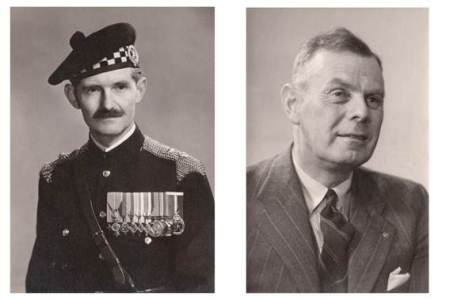
Johnston Carmichael founders - William Johnston & John Carmichael
Johnston, armed with early experience converting farm books into annual accounts, recognised that local businesses needed not just accountants, but advisers who really understood their world. Carmichael shared that instinct, and together they embedded personal service and integrity into the firm’s foundations.
Despite modest beginnings - their assets meticulously listed down to the cigarette ashtrays - the firm’s first two years were remarkably successful. By the end of year one, fees exceeded expectations, and within the second year income had increased by 68%, confirming the strength of the fledgling partnership.
Weathering war and seizing opportunity
The outbreak of the Second World War tested the firm’s resilience. Johnston departed for military service, while Carmichael kept the business running at home, capitalising on new government efforts to boost agricultural production. Travelling farm to farm, Carmichael laid the foundations for a client base that would sustain the firm for decades.
After the war, Johnston returned with renewed determination. Through the late 1940s and early 1950s, the firm expanded steadily, with a series of new offices opening in Buckie (1946), Inverurie (1950) and Banff (1951). Each location chosen for strategic growth potential in markets between larger cities.
This expansion was supported by a powerful model, locating the accountancy practice offices near Halifax Building Society agencies, an approach which strengthened the firm’s presence and reputation within new communities.
By the mid‑1950s, Johnston Carmichael operated five offices across the North‑East, delivering high‑quality, timely accounts and earning the trust of local banks, something Johnston in particular always saw as essential.
A new generation and a shift toward modernisation
The 1970s brought major change as Grenville Johnston, William’s son, joined the firm. He entered at a time when new technology was emerging, and quickly introduced cutting edge innovations such as electronic calculators, typewriters and, later, computerised accounting. This approach to modernising operations distinguished the firm from competitors, slower to embrace technological progress.
This era also saw the rise of a new cohort of partners, including Peter Simpson, Patrick Machray and James Campbell, who would help steer the firm well into the 21st century. The modern approach wasn’t for everyone though and, when Bill Johnston retired in 1977 he famously said, “The future is computers - and I want nothing to do with them!”.
A modern management structure emerges
By 1985 the increasing scale of the business required a more sophisticated governance model. A ‘Managing, Finance and Administration Committee’ was created to centralise leadership decisions. Further evolution followed in 1991 when Patrick Machray became the firm’s first chief executive, formalising leadership and enabling more strategic, long‑term planning.
During this period, the firm continued to broaden its footprint, strengthening the Inverurie, Huntly, Aberdeen and Fraserburgh offices and embracing new specialisms in tax, financial services and business support.

At an agricultural show in the mid-2000s
Regional expansion: Inverness, Perth and beyond
The 1990s and early 2000s saw Johnston Carmichael transform from a regional practice into a national firm.
In Inverness, mergers with Bell Bauchop (1995) and later Andrew Duncan & Co (2004) strengthened the firm’s Highland presence and introduced strong specialist tax capabilities.
Perth (2004) became a strategic foothold into Tayside, Fife and the Central Belt, where the firm revitalised an established practice and grew its service offering.
Perhaps the most ambitious development came in the early 2000s with expansion into the Central Belt. The Edinburgh office opened in 2002, starting from a blank slate. Despite having no initial client base, early wins and strong relationship‑building saw the office surpass £1m in fees within four years. Glasgow followed, welcoming a dynamic team who steadily built brand visibility and diversified the office’s expertise.
These moves represented a pivotal shift, positioning Johnston Carmichael not just as a northern firm, but a truly national player.
As the firm grew into new cities, the importance of a consistent internal culture became clearer. The expansion required teams that could work effectively across locations while maintaining the same standards of service and professionalism.
This led to the development of a support infrastructure unmatched by many peers. Investments in training, dedicated internal specialists and a strong IT backbone professionalised operations and supported our people across all offices.
Pictures include: Long Service Awards in 2007, Aberdeen Partners in 2002, charity Forth Rail Bridge abseil in 2006.
In 2013, the firm undertook a significant rebrand which formally introduced four core values – remaining relevant, leading our future, doing the right thing and standing in other people’s shoes. These helped articulate behaviours that had long been part of the organisation, providing a clearer framework for how people worked together and supported clients
Corporate social responsibility also became a defining part of the firm’s culture, with our people across Scotland contributing to charitable and community projects, from marathons to mountain climbs.
In 2019, the firm further strengthened its Scottish presence with the opening of its Dundee office, expanding support for clients across Tayside and enhancing its reach in one of Scotland’s most vibrant commercial centres.
Across all offices, the emphasis on developing people and creating a positive working environment remained central. Many colleagues built long careers within the firm, contributing to a culture shaped by stability, shared experience and professional growth.
Pictures include: our newly launched Dundee office, celebrating with Oor Wullie in 2019. Craig MacPherson and Scott Dunbar working in the brand new Elgin office space in 2024. Anton Colella and Shaun Millican at a conference. A new look at our rebranded Inverness office in 2022. Chair, Mark Houston and CEO, Lynne Walker. Our 2024 student intake.
Making moves south
As the firm continued to grow and its clients increasingly operated on a national and international stage, Johnston Carmichael recognised the need to extend its reach beyond Scotland. The move south was a natural evolution. Opening offices in London (2019) and Newcastle (2023) marked a significant step in that journey.
London offered a gateway into the UK’s financial and commercial heart, placing the firm at the centre of decision‑making for many of its long‑standing clients and opening doors to new sectors and opportunities. The presence there strengthened relationships with investors, advisers and industry specialists.
Newcastle, meanwhile, provided a strategic bridge between Scotland and the wider business communities of the North of England. The city’s strong professional network and vibrant entrepreneurial landscape aligned well with Johnston Carmichael’s culture and expertise. Establishing a base there enabled the firm to serve clients across northern England more directly, deepening relationships and expanding its advisory reach.

Paul Shields pictured in our Newcastle office
What’s next?
Looking back across the decades, the firm’s development can be traced through a series of deliberate steps. Each period brought its own changes - new offices, new people, new ways of working - but the underlying approach remained steady. The business grew by responding to the needs of its clients, investing in its capabilities and adapting as the profession evolved.
From its beginnings in the north east to a presence across Scotland and, more recently, into London and Newcastle, the pattern has been consistent, identify where the firm can make a meaningful contribution and build from there. The result is an organisation that has expanded significantly while retaining the practical, service‑led ethos that shaped its early years.
As the firm looks ahead, the same principles that guided its founders continue to provide a clear direction. The landscape will change, as it always has, but the commitment to doing things well, supporting clients and developing its people remains central to how the firm moves into its next chapter.

CEO
Lynne Walker
CEO and Partner, Lynne joined Johnston Carmichael in 2005 and has over 20 years' experience working within our Audit and Business Advisory business lines.
Meet our team